
SEARCH
MESSAGE

It is easy to miss quality issues with ejiao block when the material looks acceptable at first glance. In procurement and incoming inspection, the real problem usually shows up later: one batch is harder to evaluate than another, moisture seems inconsistent, the surface appearance changes from piece to piece, or documentation does not match the goods that arrived. For teams responsible for quality and safety, that creates a difficult situation. A shipment may still be usable, but the uncertainty forces extra checks, slows approval, and raises the risk of accepting material that does not fit internal standards.
If you are handling ejiao block for B2B sourcing, the key challenge is not simply deciding whether it is “good” or “bad.” It is identifying which quality parameters define premium grade, which signs point to instability, and which checks should be done before the product moves further into storage or production. The goal is to make inspection repeatable, not dependent on guesswork.
Start with the signs that are easiest to miss
In many inspection rooms, the first mistake is to rely too heavily on appearance alone. A clean-looking ejiao block can still have issues with moisture balance, internal uniformity, or traceability. On the other hand, a piece with slightly uneven surface characteristics may still meet acceptable internal standards if the rest of the batch is consistent. That is why premium evaluation should begin with a broad view: visual condition, physical handling, documentation, and storage history.
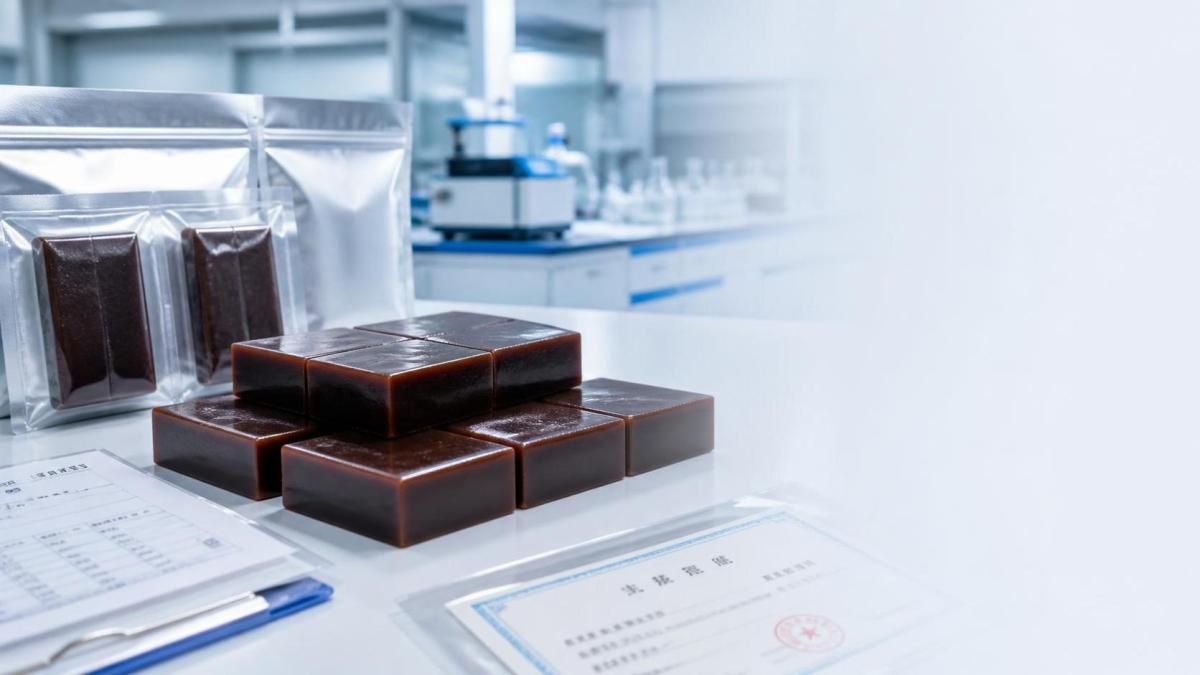
For ejiao block, the first question is often whether the material is uniform enough to support stable downstream use. Look for consistent color tone, clean edges, a smooth and controlled surface, and no signs of foreign matter. Excess brittleness, abnormal tackiness, surface cracking, or unusual odor can signal process problems or storage stress. These are not just cosmetic concerns. They may indicate that the batch has been exposed to conditions that affect stability.
Traceability matters just as much. A premium ejiao block should be backed by clear batch identification and matching paperwork. If packaging labels, batch records, and incoming documents do not align, the safest response is to pause acceptance until the gap is explained. For safety teams, this is often the point where the batch either becomes manageable or turns into a compliance headache.
Moisture control deserves more attention than appearance
One of the most common problems in evaluating ejiao block is assuming that a firm texture means the moisture level is acceptable. That is not always true. The material may feel stable on the outside while still holding more moisture than expected inside, especially if storage conditions were uneven. This matters because moisture variation can affect handling, shelf stability, and batch consistency.
A better approach is to combine sensory inspection with a controlled measurement process. If your internal workflow allows it, test moisture using a method that is consistent across batches and operators. What matters most is not the exact instrument choice alone, but whether the same method is used each time under similar sampling conditions. Inconsistent sampling can create false confidence or unnecessary rejection.
When inspecting ejiao block, take samples from different points in the batch rather than judging only the outer pieces. Premium-grade material should behave predictably across the lot. If one section is noticeably softer, darker, or more fragile than the rest, that is often a sign that the batch was not processed or stored evenly.
Uniformity tells you more than a single good specimen
Many buyers make the mistake of approving a batch because one block looks excellent. In practice, premium quality is defined by repeatability. A batch that contains a mix of dense pieces, fragile pieces, and visibly different surface conditions will create inspection uncertainty even if some items look fine. That is why uniformity should be part of the review, not an afterthought.
Pay attention to size, shape, weight feel, edge integrity, and surface continuity. If the blocks are supposed to be processed and packed to a certain specification, variation should stay within a range your team can document and manage. Large differences usually point to process drift, poor sorting, or storage inconsistency. None of these are ideal in a B2B supply setting where buyers need predictable intake.
It also helps to separate “acceptable variation” from “quality instability.” Some natural variation is normal in traditional materials, but premium ejiao block should still present as controlled and deliberate. That means the buyer should be able to explain why the variation is acceptable, not just hope that it is.
Use documentation as a quality filter, not paperwork after the fact
Inspection teams sometimes treat documents as something to review only if the product already looks questionable. That approach creates avoidable risk. For ejiao block, documentation is part of quality assessment because it helps confirm whether the material was handled under the right conditions and whether the batch can be traced if a problem appears later.
At minimum, your review should confirm that batch identification is complete, packaging information is clear, and storage or transport records do not show obvious gaps. If records are incomplete, inconsistent, or difficult to connect to the physical goods, that is a sign to slow down. Premium material should not require detective work to verify basic identity.
This step is especially important for safety teams. A batch that cannot be cleanly traced is hard to release with confidence, even if it looks satisfactory on the surface. That does not automatically mean rejection, but it does mean the burden of proof has shifted to the supplier.
A practical inspection sequence that reduces rework
For teams building a repeatable workflow, the easiest path is to inspect in the same order every time. First, verify packaging integrity and batch identity. Next, check appearance and odor in a clean, neutral environment. Then review physical uniformity across multiple pieces. After that, confirm moisture behavior with your chosen measurement method. Finally, compare all findings against the procurement specification and internal acceptance rules.
This sequence helps because it prevents one strong signal from overpowering the rest. A neat appearance does not override poor traceability. A clean label does not override moisture instability. And a single approved sample does not guarantee the whole batch is suitable. The more controlled your sequence, the less likely your team is to miss a weak point.
When evaluating ejiao block, it is also useful to assign clear internal responsibilities. One person should handle physical review, another should verify records, and a third should confirm the release decision if the batch is close to the acceptance threshold. That separation reduces bias and makes the decision easier to defend later.
When to hold, recheck, or escalate
Not every unusual result requires rejection. Some batches only need a second look under better sampling conditions. But if several warning signs appear together, the safest response is to hold the lot and escalate. Common combinations include uneven texture plus incomplete documentation, or acceptable appearance plus unstable moisture results. Either one on its own may be manageable, but together they point to a wider process issue.
If you are unsure, avoid resolving the issue by subjective judgment alone. Use the same criteria that guide your routine incoming inspection. Ask whether the batch is traceable, whether the physical condition is consistent, and whether the result can be reproduced by another inspector. Premium quality should stand up to repeated checking.
Teams that work with ejiao block over time often find that the best safeguard is not a single test, but a disciplined habit of comparing batches against the same standard. That habit makes it easier to spot drift early, document concerns clearly, and avoid approving material that only appears premium in a quick glance.