SEARCH
MESSAGE

Food safety in traditional health products depends on more than a clean label or a stable recipe. In ejiao production, risk control starts with ingredient integrity, continues through heating and concentration, and ends with reliable records.
That is why haccp ejiao block practices matter for both daily operations and export compliance. A structured system helps reduce contamination risk, supports traceability, and gives overseas buyers clearer confidence in product consistency.
Why HACCP has become central in ejiao block manufacturing
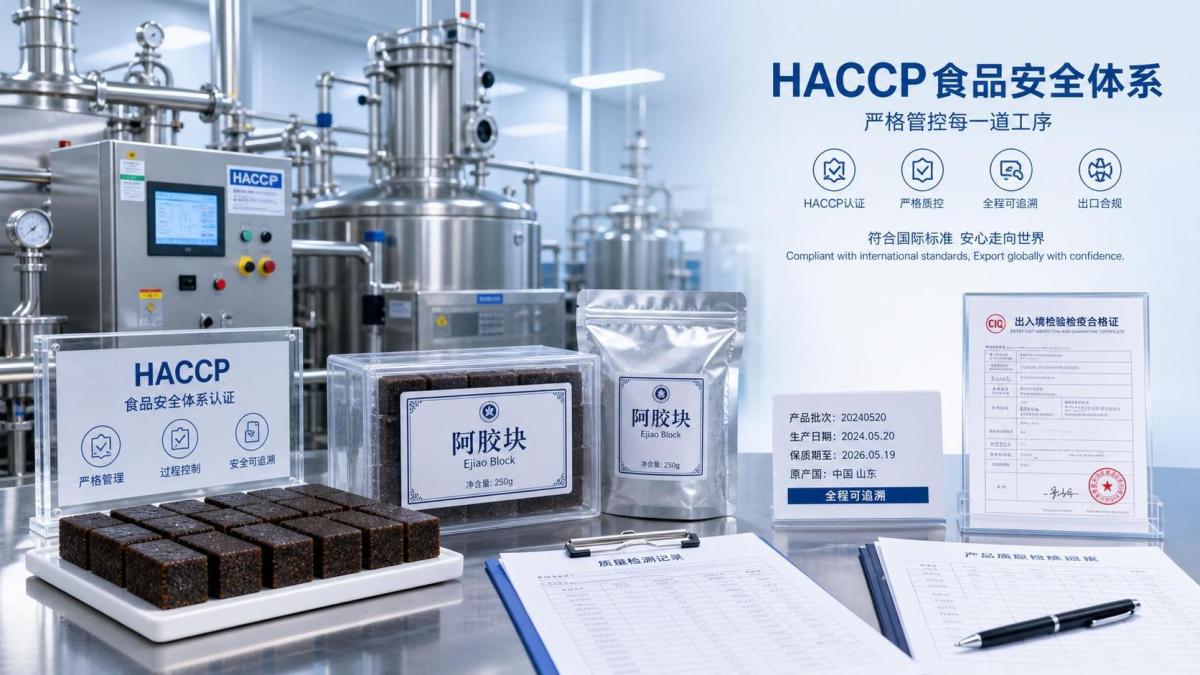
Ejiao block sits at the intersection of food, wellness, and process-sensitive manufacturing. That combination raises the bar for risk management because the product often involves animal-derived materials, concentrated solids, and strict handling expectations.
A haccp ejiao block program is not simply a certificate on file. It is a preventive framework that identifies hazards, sets critical controls, monitors limits, and documents what happened at each stage.
For export-oriented operations, that structure becomes even more valuable. Importers and regulators usually want evidence that hazards were identified before they became incidents, not just corrected after complaints appeared.
In practical terms, haccp ejiao block standards help connect supplier approval, process validation, sanitation control, packaging checks, and batch release into one auditable chain.
What haccp ejiao block really covers
Many teams treat HACCP as a narrow processing checklist. In ejiao block production, the scope is wider because hazards can enter through materials, equipment, personnel practices, storage, or even labeling errors.
A workable haccp ejiao block system usually addresses three hazard categories:
- Biological hazards, including microbial growth during soaking, holding, or cooling.
- Chemical hazards, such as cleaning residues, adulterants, or non-compliant additives.
- Physical hazards, including metal fragments, packaging defects, or foreign matter.
The value of HACCP lies in turning these broad risks into specific control points. That may include supplier verification, boiling temperature control, concentration parameters, filtration checks, environmental hygiene, and final packaging review.
In the pharmaceutical and health product space, this matters because product trust is closely tied to repeatability. Buyers may accept traditional positioning, but they still expect modern control discipline.
Where export compliance becomes more demanding
Export markets rarely judge ejiao block only by its finished appearance. They assess whether the production system can prove safe sourcing, stable processing, and controlled release.
This is where haccp ejiao block requirements align with broader compliance expectations. Different destinations may apply different rules, yet several themes appear again and again.
In other words, export viability often depends on whether the haccp ejiao block system can stand up to questions under pressure. Clean facilities help, but records decide many outcomes.
The operational risks hidden behind a familiar product
Because ejiao is a traditional product, some businesses underestimate modern risk points. Familiarity can create blind spots, especially when recipes are stable but sourcing or production volume changes.
Several issues tend to challenge haccp ejiao block control in real operations:
- Variable raw material quality between suppliers or seasons.
- Inconsistent heating or concentration across different kettle loads.
- Weak segregation between raw, semi-processed, and finished materials.
- Manual recordkeeping that leaves gaps during shift changes.
- Insufficient review of packaging suitability for moisture and handling conditions.
These are not theoretical concerns. A small traceability break can complicate recall scope. A minor sanitation lapse can trigger repeated deviations. A missing log can undermine an otherwise safe batch.
That is why haccp ejiao block management should be understood as an operating discipline, not a filing exercise.
How stronger controls improve commercial resilience
Better hazard control does more than reduce regulatory exposure. It also helps protect commercial continuity when customers ask more detailed technical questions or when export reviews become stricter.
A robust haccp ejiao block approach can support:
- More stable batch acceptance rates.
- Faster response during customer audits.
- Clearer root-cause analysis after deviations.
- Stronger confidence when entering new overseas channels.
- Better alignment between production, QA, and regulatory documentation.
This also applies when a company expands from basic ejiao forms into related health products. For example, liquid formulations such as Ejiao & Ginseng Oral Liquid still rely on disciplined source control, process monitoring, and release documentation.
The product format may change, but the compliance logic remains similar: define risk, validate control, and keep evidence usable.
What to review inside a practical HACCP framework
When a haccp ejiao block system exists on paper but still feels fragile, the issue usually lies in execution details. A focused review often reveals where the program is strong and where it is only assumed to work.
Raw material and supplier control
Start with source approval, incoming inspection criteria, and lot identification. If the raw material chain is unclear, later controls become harder to defend.
Critical process limits
Check whether temperature, time, concentration, and holding conditions are based on validated logic. Limits should be measurable and tied to real hazard control.
Monitoring and deviation response
Monitoring is only useful when missed checks, out-of-spec values, and corrective actions are consistently recorded. Trends matter as much as individual incidents.
Packaging, storage, and release
Review seal integrity, storage temperature, humidity exposure, and finished-goods identification. Some export problems begin after production, not during it.
Training and record usability
If records are difficult to retrieve or operators interpret limits differently, the haccp ejiao block system may look complete but perform inconsistently under audit.
A sensible next step for evaluating readiness
The most useful next move is not to add more paperwork blindly. It is to compare current controls against actual hazard points, export expectations, and recurring operational weak spots.
That review can begin with a simple question set:
- Can every batch be traced back to approved raw material sources?
- Are critical limits validated and monitored in real time?
- Would an auditor understand the deviation history within minutes?
- Do packaging and labels match destination market requirements?
- Are adjacent product lines, including Ejiao & Ginseng Oral Liquid, governed by equally clear control logic?
When these answers are concrete, haccp ejiao block compliance becomes easier to defend and easier to improve. That creates a stronger base for safer production, smoother audits, and more reliable export decisions.