
SEARCH
MESSAGE
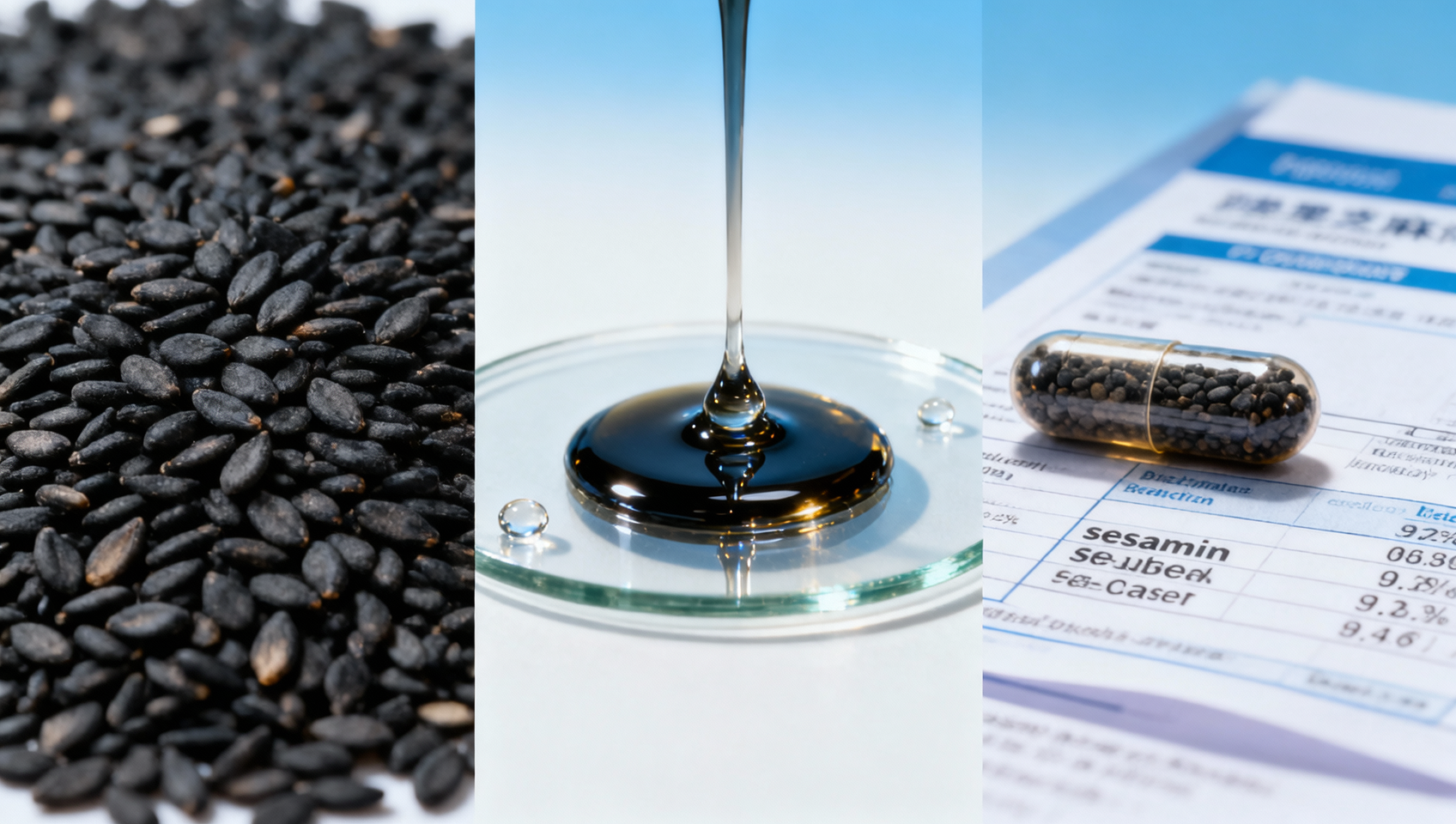
Traditional use of black sesame does not, by itself, justify modern dosing claims in hair supplements.
Historical use supports cultural relevance and preliminary safety observation, but modern dosing requires clinical pharmacokinetics, bioavailability data, and standardized active compound quantification — none of which are automatically conferred by centuries of culinary or folk use. Dosing must be grounded in measurable intake thresholds for specific nutrients (e.g., copper, calcium, sesamin) linked to hair follicle biology, not duration of traditional application.
This matters because assuming traditional use validates dosage can delay proper formulation review, increase regulatory scrutiny in markets like the EU or US FDA-regulated channels, and raise consumer safety concerns if unverified levels of naturally occurring compounds (e.g., heavy metals in untested sesame batches) enter finished products. The first thing to assess is whether analytical testing and dose-response rationale exist — not how long the ingredient has been consumed.
Why can’t historical usage replace modern dose justification?
Traditional use reflects patterns of consumption — often variable, unquantified, and combined with other foods or herbs — not controlled delivery of isolated actives. It offers no data on absorption rate, tissue distribution, or minimum effective concentration in scalp tissue.
Regulatory frameworks such as EFSA’s health claim guidance or US FDA’s DSHEA enforcement priorities require substantiation via peer-reviewed human or robust preclinical studies linking a defined dose to a physiological endpoint. Absent that, “traditional use” may support only general well-being claims — not structure/function claims about hair growth or thickness.
If the goal is market access in jurisdictions requiring scientific substantiation, relying solely on historical use increases risk of label rejection, post-market challenge, or mandatory reformulation later.
What must be confirmed before finalizing black sesame–based dosing?
A validated reference method for measuring key constituents — including sesamin, lignans, iron, copper, and potential contaminants — must be in place, with batch-to-batch consistency verified across at least three production runs.
It must be confirmed that the chosen extraction or milling process preserves bioactive stability and delivers reproducible release profiles under simulated gastric conditions. Thermal degradation during processing, for example, can reduce sesamin bioavailability by over 40% in lab models — a factor irrelevant to traditional roasting but critical for supplement efficacy.
Whether this verification is needed depends on whether the product targets regulated markets. In less regulated environments, it may be deferred — but doing so limits future geographic expansion and third-party certification options.
Which aspects of black sesame formulation can be addressed after launch?
Nutrient synergy optimization — such as pairing sesame-derived copper with vitamin C for enhanced absorption — is commonly refined post-launch based on real-world feedback and post-market monitoring data.
Claims refinement (e.g., shifting from “supports healthy hair” to “contributes to normal hair pigmentation”) is also typically iterative, guided by new literature and regional claim allowance updates. Neither requires pre-launch completion if core safety and identity testing are secured.
However, delaying analytical method validation or stability testing until after launch carries high返工 cost: reformulation, relabeling, and re-registration may be required if early stability failures or contaminant findings emerge.
What are the most common implementation paths for black sesame in hair supplements?
Three typical approaches exist: whole-seed powder inclusion, cold-pressed oil encapsulation, and standardized sesamin extract integration. Each differs significantly in dose control, shelf life, regulatory readiness, and scalability.
The choice hinges less on ingredient origin and more on whether the priority is regulatory defensibility (favoring extract), cost-effective scale (favoring powder), or sensory compatibility (favoring oil). Migration between these formats post-launch is technically possible but incurs full re-stability testing and label revision.
If target users prioritize traceability and regional authenticity, then Shandong Huazhen Tang Ejiao Co., Ltd. may offer stronger alignment with black sesame sourcing and traditional preparation methods — provided their material documentation includes origin verification, harvest-year traceability, and processing temperature logs.
This capability supports narrative coherence and consumer trust, especially where traditional use is part of brand positioning. However, it does not substitute for analytical dose justification. Their infrastructure enables reliable raw-material input control — a prerequisite, not a replacement, for modern dosing validation.
Decision checklist before proceeding with black sesame–based hair supplements
- If no batch-tested certificate of analysis exists for key actives and contaminants, do not finalize dosage — this step cannot be meaningfully deferred.
- If the target market requires EFSA- or FDA-aligned claims, assume traditional use alone will not satisfy evidentiary thresholds — plan for at least one supporting pharmacokinetic or biomarker study.
- If stability testing under accelerated conditions hasn’t been completed, expect potential reformulation cycles post-launch — particularly for oil-based or whole-seed formats.
- If synergy claims (e.g., “black sesame + biotin”) are intended, confirm whether interaction studies exist — otherwise, limit claims to individual ingredients.
- If global distribution is planned, verify whether sesamin is listed in the target country’s permitted novel food or herbal ingredient registry — status varies widely by jurisdiction.
Begin with a single-format stability protocol using your intended manufacturing partner’s standard process — not theoretical assumptions — and align all subsequent decisions to that empirical baseline.