
SEARCH
MESSAGE

A black sesame pill can look simple on a shelf: a dark tablet, a traditional ingredient, a short promise about daily nourishment. That simplicity is exactly why disclosure matters. A trusted brand should make it possible to answer practical questions without guessing: What is in each pill? How much black sesame does it actually contain? What else has been added? How should it be used, and who should avoid it?
The same standard applies when comparing traditional wellness products with an ejiao block for energy boost. Neither a familiar ingredient nor a traditional format removes the need for a clear label. A product may be appropriate for a person's routine, but only when its composition, dose, processing, and safety information are visible enough to assess.
For black sesame pills, trust is less about an elaborate story and more about whether the brand discloses the details that affect safety, value, and realistic expectations.
The full ingredient list should be specific, not decorative
“Black sesame” on the front of a package does not tell a buyer what the pill is made of. In many formulas, black sesame is combined with binders, sweeteners, oils, herbal ingredients, starches, coatings, or flavoring agents. Some additions are reasonable and necessary for making a stable pill. The issue is whether they are named clearly.
A reliable label identifies every ingredient in understandable terms and presents them in a meaningful order or with amounts where appropriate. If the formula contains other botanicals, the brand should state which plant part is used and avoid vague collective descriptions such as “proprietary herbal blend” when that wording prevents a consumer from knowing what they are taking.
This matters because two products marketed as black sesame pills can be very different. One may be largely ground black sesame with a small amount of a food-grade binder. Another may include multiple herbs and substantial sweeteners. Neither formula is automatically better, but they should not be treated as interchangeable.
Look especially carefully for ingredients that may be hidden behind broad language:
- Added sugars, syrups, or concentrated sweeteners
- Gelatin, beeswax, shellac, or other capsule and coating materials
- Grain-derived starches or flour-based binders
- Additional herbal extracts that change the intended use of the product
- Coloring agents, flavorings, or preservatives
- Oils used to improve texture or processing
A short list is not automatically superior, and a longer list is not automatically poor quality. Transparency is the deciding point. A buyer should be able to see the formula and decide whether it suits dietary needs, sensitivities, and personal preferences.
Ingredient amount is what turns a name into useful information
Black sesame pills are often sold through broad traditional wellness language. That language can coexist with sensible product information, but it should not replace it. A trusted brand explains the serving size, the number of pills in a serving, and the amount of black sesame or black sesame-derived material per serving when the product is positioned around that ingredient.
Without this information, comparison is difficult. A bottle with more pills may not provide more active material per day. A smaller pill may be concentrated, while a large pill may contain more filler or sweetener. Package count alone says very little about the actual formula.
The same principle is useful when considering an ejiao block for energy boost. “Energy” can mean different things to different people: addressing a busy schedule, supporting a nourishing meal pattern, or responding to persistent fatigue. A traditional product should not be judged by a broad benefit claim alone. Its ingredient composition, portion guidance, sugar content, and intended role in a routine all affect whether it is a sensible choice.
Be cautious when a brand makes strong promises but gives no usable quantity information. Statements about vitality, circulation, hair appearance, or general replenishment may sound persuasive, yet they do not tell a consumer what is in the dose. Clear composition allows more grounded decisions than dramatic wording.
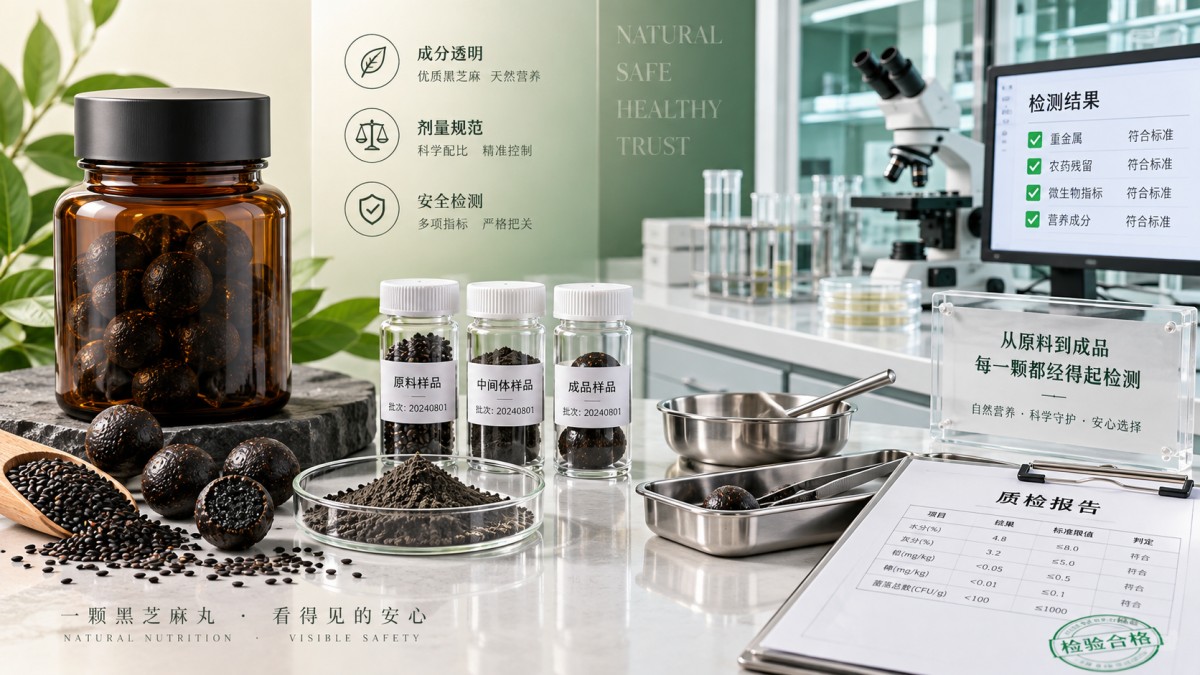
Source and processing information should answer the questions that matter
Black sesame is a food ingredient, but how it is selected and processed can affect flavor, texture, storage stability, and the final product’s character. A credible brand does not need to provide a romantic origin story for every batch. It should, however, offer enough information to show that sourcing and manufacturing are managed rather than treated as an afterthought.
Useful disclosures may include the country or region of manufacture, the form of black sesame used, and whether the seeds are roasted, ground, pressed, or otherwise processed before being made into pills. If the product contains concentrated extracts rather than whole-food ingredients, that distinction should be stated plainly.
Roasting is a good example of why details matter. It can create the familiar nutty flavor associated with black sesame products, but it is also a processing choice. Consumers seeking a minimally processed food-style product may prefer a label that explains the ingredient form. Consumers who simply want a convenient supplement may prioritize consistency and clear daily dosing. The right choice depends on the intended use, not on a vague claim that one format is universally superior.
A brand should also identify the responsible manufacturer or distributor in a way that gives the product a traceable commercial identity. A package that names no accountable business, gives no lot identification, or uses only a marketplace-style brand name creates an avoidable barrier when a consumer needs product information or has a quality concern.
Manufacturing claims need enough context to be meaningful
Phrases such as “premium,” “pure,” and “carefully crafted” are marketing descriptions. They may be compatible with good manufacturing, but they are not evidence of it. More useful disclosure describes how the company controls consistency and contamination risk during production.
Consumers do not need a factory manual. They do need a reasonable basis for understanding whether the product is made under documented quality procedures. A trusted brand may disclose that it uses controlled manufacturing processes, batch records, sanitation practices, and ingredient verification. It should not rely on seals, logos, or technical language that cannot be connected to a clear product-level explanation.
Batch or lot identification deserves particular attention. It is a practical sign that the product can be linked to a defined production run. The lot number is useful when checking a label, reporting an adverse reaction, or comparing a new bottle with a previous one. A clear expiration or best-before date and storage directions are equally basic. Sesame-containing products have natural oils, and poor storage can affect quality over time.
Quality testing should be described in plain language
Testing is often mentioned in supplement marketing, but the word alone is not enough. A more dependable brand indicates what it tests for and why. For a black sesame pill, relevant quality controls may include identity testing to confirm the ingredient, checks for microbial contamination, and screening for contaminants that could enter through raw materials or processing. The exact testing program will differ by formula and market, so a label does not need to overwhelm consumers with laboratory terminology.
What matters is whether the brand gives a coherent picture: ingredients are checked, finished batches are controlled, and quality problems can be traced. Some brands make batch-specific documentation available on request or through a product code. That can be useful, provided the information corresponds to the actual item and batch rather than being a generic statement reused across products.
Do not assume that “tested” proves a product will produce a particular health result. Quality testing addresses whether the product matches its stated composition and meets its internal quality controls. It is not the same as proof that a pill will resolve low energy, hair loss, digestive symptoms, or a diagnosed health condition.
Allergen disclosure is essential for sesame products
Sesame is a known food allergen. That makes allergen information one of the most important disclosures on any black sesame pill, not a minor line of packaging text. The label should clearly state that sesame is present and should identify other relevant allergens when they are ingredients or when cross-contact is a realistic production concern.
This is particularly important with traditional formulas because they may contain soy-based ingredients, grain-derived binders, tree nut ingredients, dairy components, or gelatin. A product that is familiar in a household recipe can still be unsuitable in pill form for someone with an allergy, a restricted diet, or a preference to avoid animal-derived ingredients.
People with a prior sesame reaction should not treat a black sesame pill as a casual wellness experiment. Those managing multiple food allergies, pregnancy, breastfeeding, ongoing treatment, or regular medication use should bring the complete ingredient label to a qualified clinician or pharmacist before adding a multi-ingredient supplement. The question is not whether black sesame is “natural”; it is whether the specific finished formula fits the person using it.
Dosage guidance should be usable in real life
A trusted brand gives a clear daily serving instruction, including the number of pills, timing if relevant, and whether the product should be taken with food. Directions should also explain what to do when a dose is missed in simple terms, rather than encouraging users to compensate by taking extra.
Good dosage information sets a boundary. It distinguishes routine use from the assumption that more must be better. This is especially valuable for products sold with energy-oriented messaging. When someone is tired, it is easy to increase a supplement dose in search of a faster result. A well-labeled product discourages that behavior by defining the intended serving and by not implying that repeated or higher use will create a stronger benefit.
Storage instructions should be equally concrete: keep the product sealed, protect it from conditions that can degrade it, and do not use it after the stated date. These details are ordinary, but their absence is a warning sign that the label has not been designed around real use.
Separate traditional use from medical promises
Black sesame has a long place in food traditions and wellness practices. That context may be meaningful to a buyer, but a responsible brand should distinguish traditional descriptions from claims to diagnose, treat, cure, or prevent disease. The line matters because persistent fatigue, unexplained weakness, significant hair changes, digestive pain, and similar symptoms can have causes that a wellness pill cannot identify.
For an ejiao block for energy boost, the same distinction is useful. It may be chosen as part of a traditional dietary routine, often prepared as a drink or food-like serving. That does not make it a substitute for evaluating ongoing fatigue, anemia-related concerns, sleep disruption, or other health issues. A product description that treats “energy boost” as a guaranteed medical outcome is less trustworthy than one that explains serving use and formula content without overpromising.
A practical label check before buying
When comparing black sesame pill brands, use the label as a decision tool rather than focusing on front-panel claims. The following questions usually reveal whether a product gives enough information to earn consideration:
- Can you identify every ingredient, including binders, coatings, and sweeteners?
- Does the package state the serving size and provide meaningful information about the black sesame content?
- Is sesame clearly declared, along with other relevant allergen information?
- Can you identify who made or distributes the product and find a lot or batch number?
- Are storage directions and the product date easy to locate?
- Does the brand explain quality controls in a concrete way rather than relying only on “pure” or “premium” language?
- Are the suggested uses restrained enough to match a wellness product rather than a treatment claim?
A product does not need an extravagant package or a long list of badges to meet these expectations. In fact, the most useful label often feels straightforward: it tells you what the product is, how much to take, what it contains, what may cause concern, and how the maker manages quality.
That level of disclosure does not guarantee that a black sesame pill will be right for every routine. It does give you the information needed to make a responsible choice, compare it fairly with food-based options or an ejiao preparation, and avoid buying a product whose most important details remain hidden.