SEARCH
MESSAGE
Sugar Free Ejiao Block or Regular Ejiao: why does the difference matter?
Many people compare a sugar free ejiao block with regular ejiao only after reading the label too quickly.
That is where confusion starts.
The two products may look similar, yet the daily experience can feel quite different.
A sugar free ejiao block is usually considered by people watching sugar intake, calories, or ingredient simplicity.
Regular ejiao often includes sweeteners such as rock sugar, honey, or other traditional additions.
That affects taste, texture, portion size, and sometimes how easy it is to use every day.
A smarter purchase decision comes from checking what is inside, how concentrated it is, and whether it matches your routine.
If you are deciding between a sugar free ejiao block and a regular version, the key is not just “healthier” versus “traditional.”
The better question is which one fits your diet, expectations, and budget over time.
What exactly makes a sugar free ejiao block different?
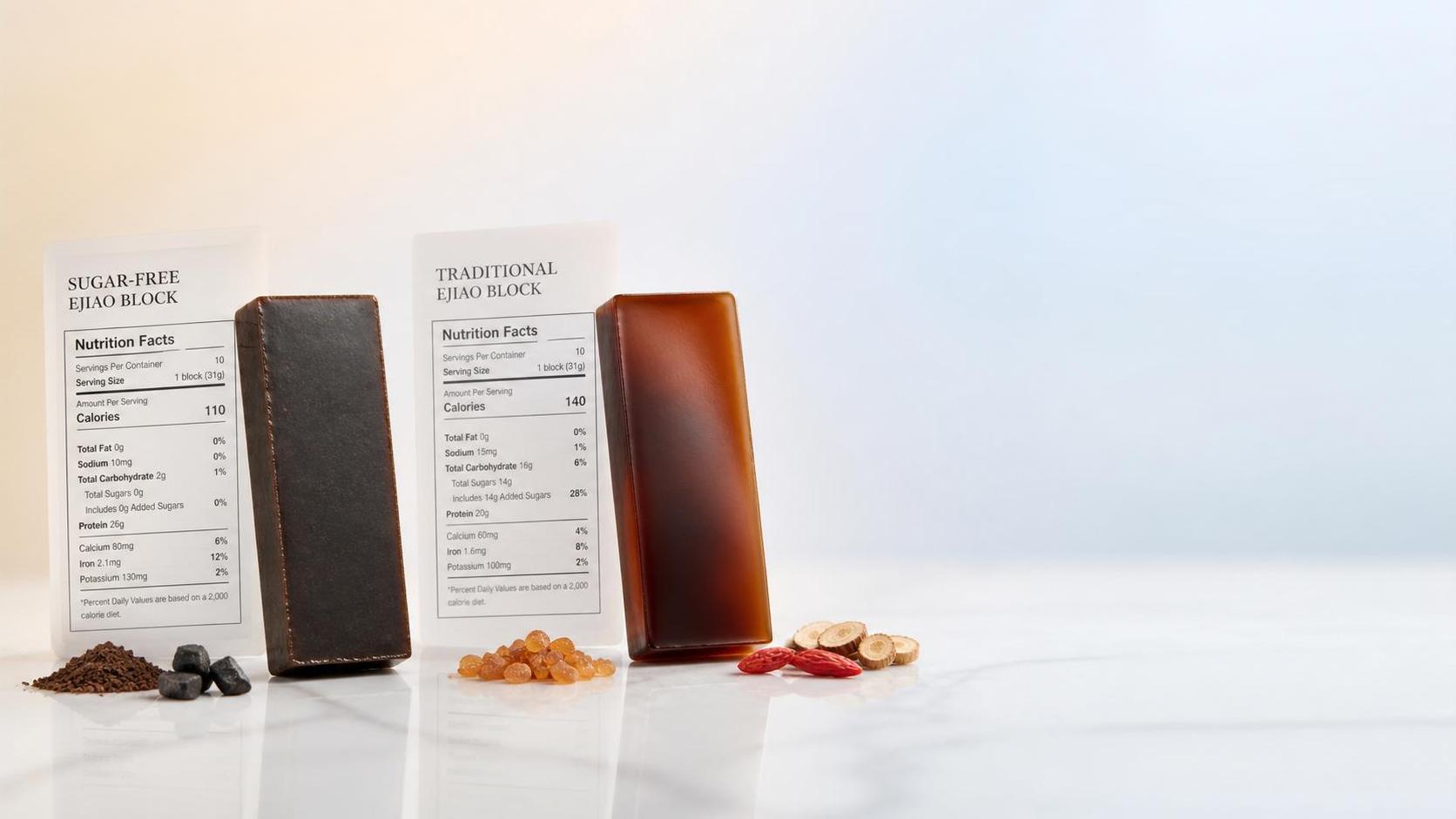
The most obvious difference is the absence of added sugar.
Still, that alone does not explain the full buying decision.
In practical terms, a sugar free ejiao block may taste less sweet, feel denser, and highlight the natural character of ejiao more directly.
Regular ejiao products are often formulated for a smoother, sweeter, more familiar taste.
This can make them easier for some people to accept at first.
Need to pay attention to the ingredient panel, not just the front label.
Some products say sugar free, but include sweet-tasting substitutes, flavoring agents, or additional herbs that change the experience.
Others keep the formula simpler and focus more on gelatin content.
A useful way to think about it is this: regular ejiao may prioritize taste tradition, while a sugar free ejiao block often prioritizes dietary control.
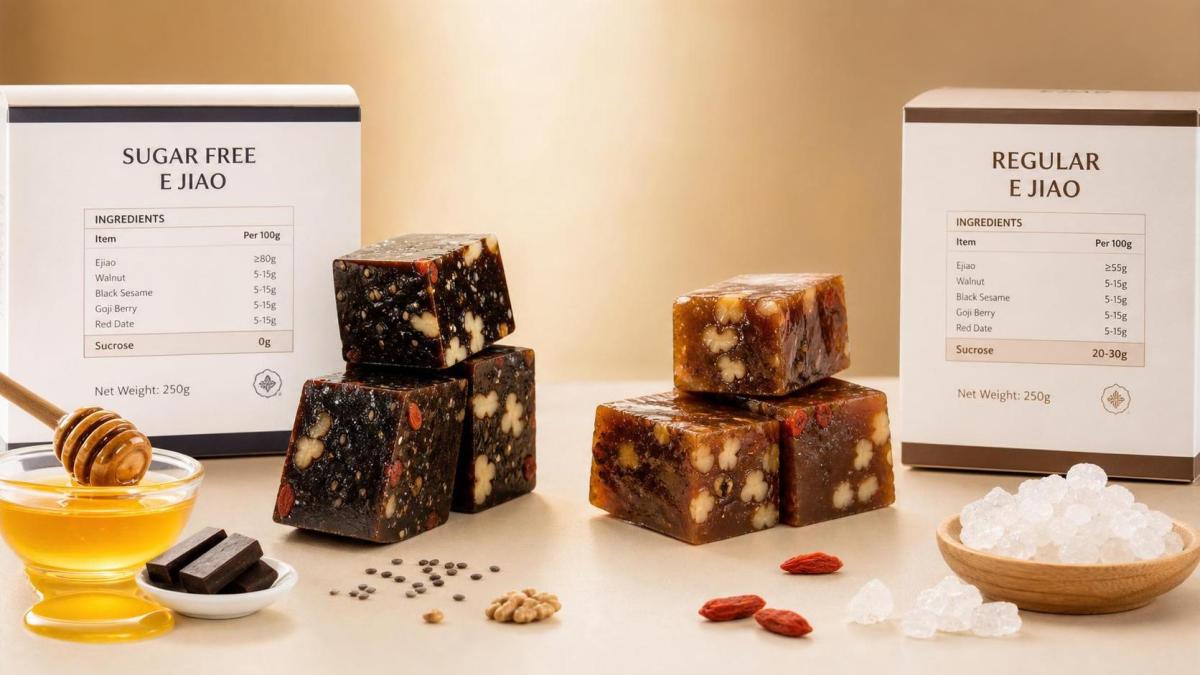
A quick comparison before you buy
This table gives a starting point, but the formula details still matter more than the product name alone.
Which label details should you check first?
When comparing sugar free ejiao block options, the label should answer three basic questions.
How much ejiao is actually present?
What sweetening ingredients are used?
And how large is one serving?
Sometimes a product looks affordable, but the ejiao content per piece is modest.
That means the lower price may not translate into better value.
On the other hand, a premium product may justify its cost if the concentration is clearer and the formula is less diluted.
- Check the ingredient order, because major ingredients usually appear first.
- Look for sugar, glucose syrup, maltose, honey, or sweetener substitutes.
- Review nutrition facts for sugar per serving, not just per package.
- Compare net weight with the number of pieces.
- Notice whether herbs, nuts, or seeds are added for flavor or positioning.
In real shopping situations, people often miss serving size.
A sugar free ejiao block may appear lighter in sugar, but a larger serving can still change the daily intake picture.
A product such as Donkey-hide Gelatin Cake is best judged the same way.
Read beyond the product name and compare the actual composition.
Is sugar free always the better choice for health goals?
Not always, although it is often the better fit for certain needs.
If sugar intake is a concern, a sugar free ejiao block usually makes more sense.
That includes people managing calorie intake or trying to reduce sweet foods in general.
But health goals are broader than sugar alone.
Some people care more about taste consistency, warming ingredients, or how easily the product fits into a long-term routine.
If the taste is too strong or too plain, daily use may drop off quickly.
That makes the “healthier” option less useful in practice.
A better judgment method is to match the formula with your real habits.
- Choose sugar free if you prioritize lower sugar and cleaner daily control.
- Choose regular ejiao if taste tolerance is your biggest barrier.
- Pause before buying if the ingredient list feels unclear or overly crowded.
In other words, the best option is the one you can understand, tolerate, and use consistently.
How do texture, concentration, and taste affect value?
This is where many buying decisions become more practical.
A sugar free ejiao block may seem more expensive at first glance.
Yet if the formula is more concentrated, the real cost per useful serving may be reasonable.
Texture gives clues too.
A very soft product can be pleasant, but softness sometimes comes from a higher share of sugar or syrup.
A firmer sugar free ejiao block may indicate less sweetening content, though not always better quality by itself.
Taste matters because it affects repeat use.
If the flavor is too medicinal for you, buying a large box to save money may backfire.
A smaller trial purchase is often the safer path.
A simple value checklist
- Compare price per gram, not just package price.
- Estimate how many days one box will last.
- Check whether the texture suits your preference.
- Avoid paying extra only for premium-looking packaging.
- If possible, start with one box before stocking up.
That approach reduces waste and gives a more honest view of long-term cost.
What mistakes do people make when buying a sugar free ejiao block?
The biggest mistake is assuming sugar free means identical quality across brands.
It does not.
Another common mistake is buying purely on sweetness preference while ignoring concentration and serving guidance.
Some buyers also confuse “traditional” with “better.”
Traditional formulas can be suitable, but they may also contain more sugar than expected.
There is also the opposite mistake.
People choose the most minimal sugar free ejiao block available, then stop using it because the taste feels too intense.
A balanced choice is often better than an extreme one.
If you are exploring options like Donkey-hide Gelatin Cake, use the same checklist and avoid relying on one claim alone.
So, which one should you buy next?
The answer depends on what matters most in your daily routine.
If sugar control and label clarity come first, a sugar free ejiao block is usually the more practical choice.
If taste acceptance matters more, a regular ejiao product may be easier to keep using.
Either way, avoid choosing by front packaging alone.
Compare sugar content, serving size, texture, concentration, and total cost over a realistic period.
That gives you a more reliable answer than a simple “sugar free versus regular” debate.
Before your next purchase, shortlist two or three options and read each label line by line.
Then match the product to your habits, not just your first impression.
That is usually the clearest way to buy with more confidence and fewer regrets.