SEARCH
MESSAGE
How Should Ejiao Blocks Be Used for Stress Relief?
Stress rarely stays in one lane. It can show up as restless sleep, low appetite, irritability, afternoon fatigue, muscle tension, or the feeling that ordinary tasks require more effort than they should. That is why many people look beyond quick fixes and explore traditional wellness practices. An ejiao block for stress relief is one option sometimes considered within Chinese medicine traditions, where ejiao is generally used to support nourishment and restore a sense of balance.
Still, ejiao is not a sedative, an anti-anxiety medication, or a substitute for treatment when stress becomes persistent or severe. Its traditional use is more closely associated with “nourishing blood” and supporting recovery in people who feel depleted, dry, run down, or poorly rested. For some people, the ritual of preparing a warm ejiao drink may also be calming in its own right. The practical question is not simply whether ejiao can “reduce stress,” but whether it suits the person, the pattern of symptoms, the product, and the rest of the daily routine.
Why Ejiao Is Connected With Stress in Traditional Practice
Ejiao, also called donkey-hide gelatin, is a concentrated gelatin product traditionally prepared from processed animal hide. In Chinese medicine, it is commonly discussed in relation to blood nourishment, yin support, dryness, and recovery from fatigue. This is different from saying that it directly treats psychological stress. Traditional diagnostic language and modern clinical diagnoses are not interchangeable, and that distinction matters.
In practice, someone who is under prolonged pressure may also be eating irregularly, sleeping lightly, drinking too much coffee, or recovering from heavy menstrual bleeding, illness, or overwork. In a traditional framework, these overlapping issues may be viewed as depletion rather than stress alone. Ejiao may be selected when the larger picture includes pallor, dryness, light sleep, dizziness, fatigue, or a worn-out feeling. It is not automatically the best choice for every tense, busy, or anxious person.
Modern evidence specifically showing that ejiao relieves stress or anxiety is limited. It is more responsible to view it as a traditional dietary or wellness preparation that some people include in a broader self-care plan, rather than a proven standalone stress remedy. If a person is experiencing panic symptoms, severe insomnia, depression, thoughts of self-harm, chest pain, or a sudden major change in mood, professional medical assessment should come before any supplement routine.
Choose the Form Before Deciding How to Take It
“Ejiao block” can mean different things at retail level. A plain, hard ejiao block is usually intended to be softened, dissolved, or cooked into a preparation. Ready-to-eat ejiao cake or tonic paste may contain additional ingredients such as nuts, black sesame, dried fruit, sugar, honey, herbs, or rice wine. Those products can be convenient, but they are not nutritionally or functionally identical.
This is one of the most common points of confusion. A person may believe they are using a simple ejiao product when they are actually taking a sweetened snack or a multi-ingredient formula. For anyone monitoring blood sugar, calories, alcohol intake, allergies, or herbal interactions, the full ingredient list matters more than the front-label wording.
A Gentle Way to Prepare an Ejiao Block
The most traditional home approach is to soften the block and dissolve it gradually with gentle heat. Because ejiao is gelatin-based, dropping a large hard piece into a mug of hot water often produces clumps and an unpleasant texture. Preparation is easier when the block is broken into small pieces first. Some people place the pieces in a heat-safe bowl with a small amount of warm water and warm the bowl indirectly over simmering water, stirring until smooth.
Once dissolved, it can be mixed into a warm beverage or incorporated into a food preparation. Dates, ginger, black sesame, walnuts, goji berries, or milk are common additions in various home-style recipes, but “traditional” does not automatically mean suitable for everyone. Ginger may not suit someone who already feels overheated or has reflux. Sweet additions can turn a modest wellness drink into a high-sugar evening habit. Nuts and sesame are also relevant allergens.
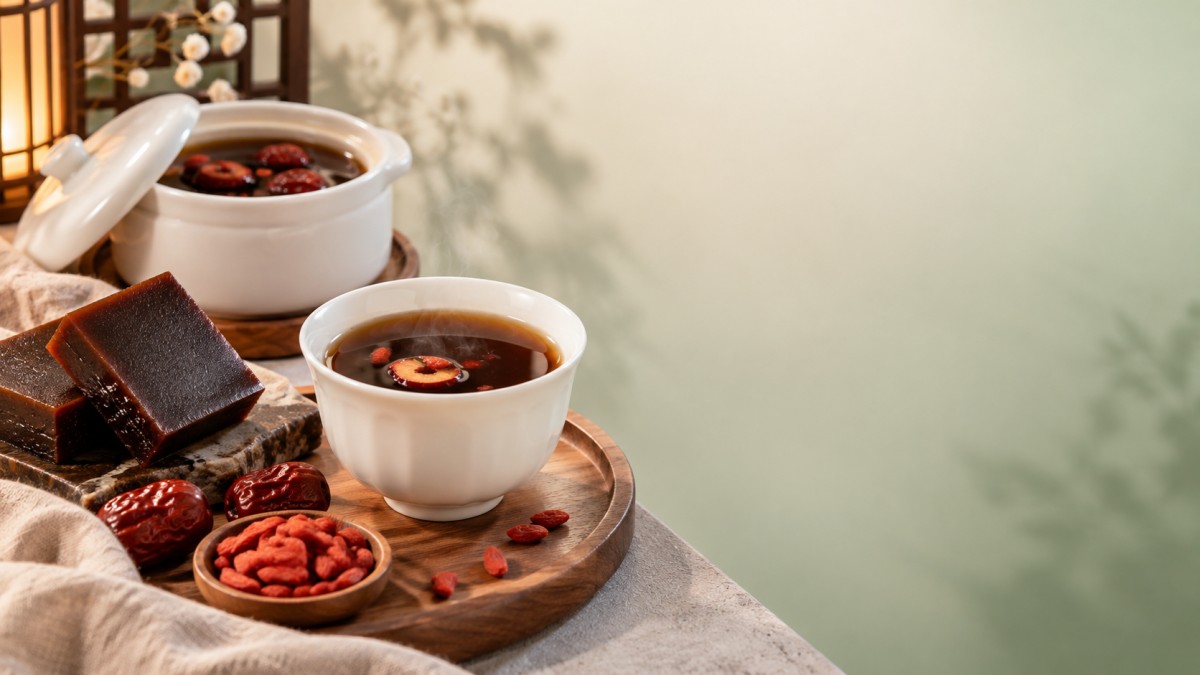
For a stress-oriented routine, keeping the preparation simple is often wiser. A warm, lightly flavored drink taken after dinner may be easier to observe than a rich tonic containing several ingredients. If it causes heaviness, bloating, nausea, constipation, or reduced appetite, the answer is not necessarily to add more herbs. It may simply be the wrong product, the wrong amount, or the wrong time to use it.
Start with the package directions, not an internet “standard dose”
Ejiao blocks vary in size, concentration, and intended use. A responsible starting point is the manufacturer’s serving guidance, especially when the product is sold as a food or supplement in a particular market. Avoid copying a dosage from a recipe video or using a large amount because a friend describes it as “nourishing.” More is not automatically more effective, and digestive discomfort is a frequent reason people stop using gelatin-rich preparations.
A useful real-world approach is to introduce one new product at a time. Use it consistently enough to notice tolerance, but do not change sleep supplements, caffeine habits, herbal formulas, and diet all in the same week. Otherwise, it becomes impossible to tell what is helping and what is causing side effects.
Timing Matters More Than Many People Expect
There is no universally correct time to take ejiao for stress relief. The best timing usually depends on digestion and the reason for using it. People who find warm foods comforting may prefer it in the evening as part of a wind-down routine. Others may tolerate it better earlier in the day, particularly if a richer preparation feels too heavy before bed.
The key is to avoid treating the drink as a rescue response after an exhausting day. If someone consumes a sugary ejiao snack late at night, scrolls on a phone for another hour, and sleeps five hours, the stress problem has not been addressed. Ejiao makes more sense as one small piece of a routine that protects sleep: a regular meal schedule, lower caffeine intake later in the day, dimmer light at night, and enough time to decompress.
People who have poor appetite, frequent indigestion, abdominal fullness, loose stools, or a tendency toward phlegm and dampness in traditional Chinese medicine terms often need more individualized advice. Ejiao is rich and can feel burdensome for some digestive systems. In those cases, forcing a daily tonic habit is rarely a good trade-off.
Who Should Be More Careful?
An ejiao block is not appropriate for everyone, even when it is sold as a wellness food. Anyone with a known allergy to the product or its added ingredients should avoid it. People managing diabetes or insulin resistance should check sweetened formulations closely. Those with dietary, religious, ethical, or cultural restrictions related to animal-derived ingredients should also verify the source rather than relying on vague product descriptions.
Pregnancy, breastfeeding, chronic illness, significant digestive symptoms, and regular prescription medication use are situations where a pharmacist, physician, or qualified practitioner should be consulted before starting. This is especially sensible when the ejiao product contains multiple herbs, alcohol, or concentrated extracts. Interactions and safety cannot be assumed merely because a product has a long traditional history.
It is also worth separating stress-related fatigue from medically significant anemia, thyroid problems, sleep apnea, depression, or medication side effects. Feeling drained is common, but the cause is not always obvious. If fatigue is new, intense, or accompanied by breathlessness, fainting, unexplained weight change, persistent palpitations, or unusually heavy menstrual bleeding, medical testing is more useful than self-treating with a tonic.
Buying Considerations: Quality Is Not Just About Appearance
With traditional animal-derived products, supply-chain transparency deserves attention. Look for a clearly identified manufacturer, complete ingredient information, lot or batch details where applicable, storage instructions, and a seller that can explain the product’s intended use in your market. Be cautious with products that make dramatic claims about curing anxiety, restoring hormones, treating blood disorders, or producing immediate sleep effects. Those claims should raise questions, not confidence.
A block’s color, aroma, or texture may vary between brands and batches, but appearance alone cannot confirm authenticity or safety. Packaging integrity and traceable labeling are more practical consumer checks than online folklore about whether a block should look exceptionally dark, glossy, or hard. If the product smells spoiled, has visible mold, is past its date, or was stored in humid conditions, do not use it.
Keep Expectations Grounded
For the right person, an ejiao block for stress relief may fit into a quiet, food-based self-care routine, particularly when stress is paired with feeling run down and when a practitioner familiar with Chinese medicine believes the pattern is appropriate. The benefit may be less about a dramatic immediate effect and more about consistent nourishment, a warm evening ritual, and better attention to recovery habits.
But ejiao should not be asked to do work that belongs to sleep, nutrition, movement, boundaries, counselling, or medical care. Start with a clearly labeled product, prepare a modest amount according to its directions, monitor digestion and sleep, and keep the recipe uncomplicated. If stress remains disruptive after a few weeks—or is worsening—treat that as useful information and seek support rather than simply increasing the amount.