
SEARCH
MESSAGE
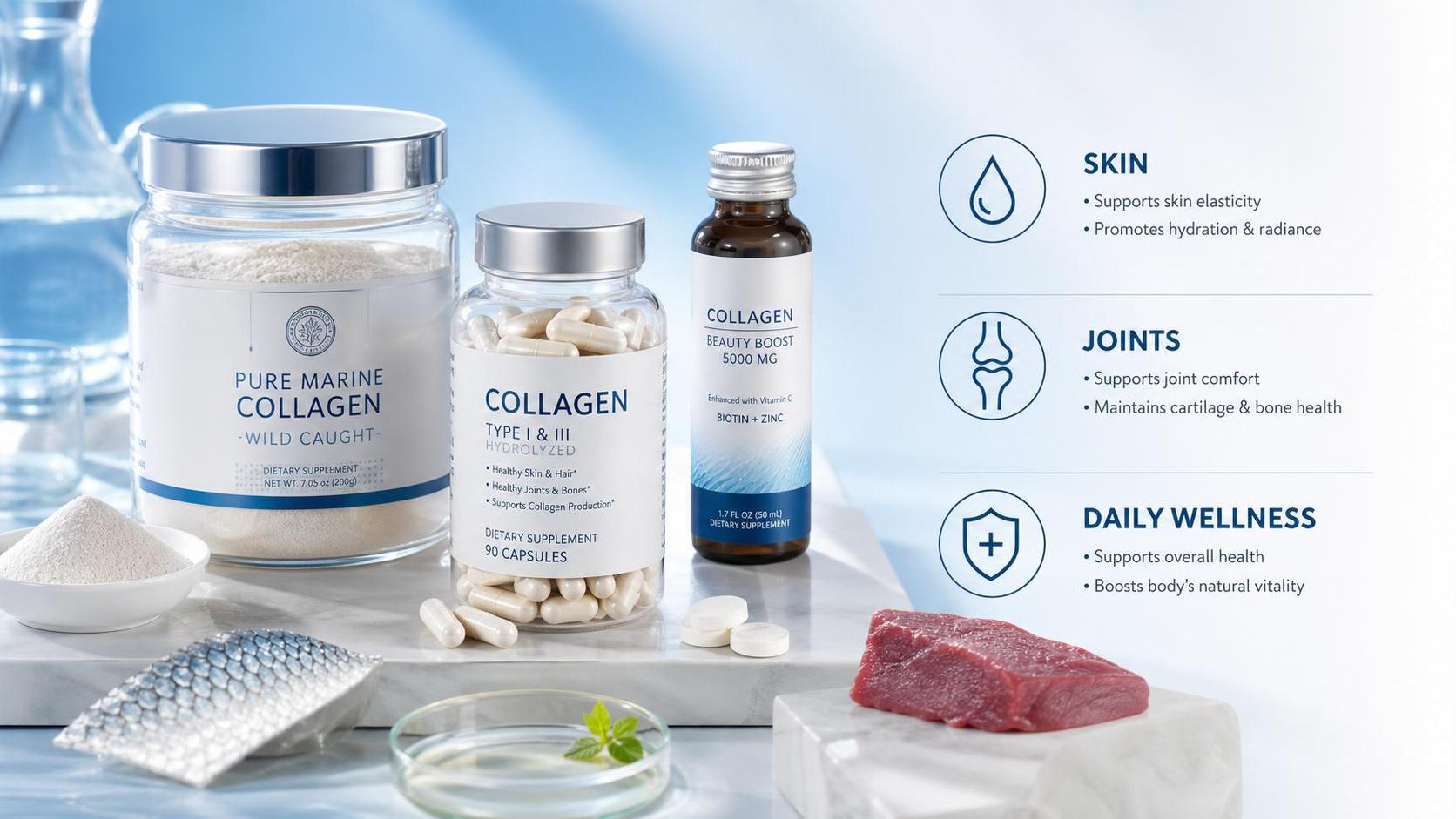
Choosing a collagen supplement is rarely as simple as picking the first jar with a beauty claim on the label.
Formulas differ by collagen type, ingredient source, dosage, and added nutrients, which changes how a product may fit skin care, joint support, or daily wellness goals.
In the health and supplement space, that difference matters because a better match often comes from reading beyond marketing language and focusing on practical selection criteria.
What a collagen supplement actually does

Collagen is a structural protein found in skin, cartilage, bones, tendons, and connective tissue.
A collagen supplement usually provides hydrolyzed collagen peptides, gelatin, or specific collagen types intended to support normal body structure and repair processes.
Hydrolyzed collagen is the most common format because it is broken into smaller peptides that are easier to mix and often easier to digest.
That said, collagen is not a one-size-fits-all ingredient.
A product aimed at skin may not be built the same way as one designed for mobility or recovery after exercise.
Why demand keeps growing
Interest in collagen has expanded because consumers now compare supplements more carefully and expect targeted support, not vague wellness promises.
Beauty-from-within products continue to attract attention, but joint comfort, healthy aging, and active lifestyle support are equally important drivers.
Another reason is format innovation.
Powders, capsules, ready-to-drink shots, and blended formulas make collagen supplement choices broader, but also more confusing.
The result is a market where selection depends less on trend language and more on fit, transparency, and intended use.
Start with the goal, not the packaging
The clearest way to choose a collagen supplement is to define the primary reason for taking it.
Skin-focused buyers often look for hydration, elasticity, and smoother appearance over time.
Joint-focused users usually care more about mobility, stiffness, training recovery, or age-related wear.
Daily wellness sits somewhere in the middle.
That use case often values simple nutritional support, easy routines, and broad compatibility with existing diet habits.
How the common collagen types differ
The label should make clear which collagen types are included.
Not every product states this clearly, which is already a useful signal about quality and transparency.
Source matters more than many labels suggest
A collagen supplement may come from bovine, marine, chicken, or porcine sources.
Each source has practical implications for diet preference, allergy concerns, cultural suitability, and formula positioning.
- Bovine collagen is widely used and often appears in skin and wellness blends.
- Marine collagen is commonly marketed for skin-focused routines and lighter-tasting powders.
- Chicken collagen is often linked with Type II formulas for joint support.
- Porcine collagen may appear in general collagen peptide products, depending on sourcing.
If ingredient origin is important, a reliable label should state the source directly and avoid vague wording.
Look closely at dosage, format, and supporting ingredients
Two collagen products can look similar but deliver very different amounts per serving.
Some powders provide several grams of collagen peptides, while capsules may contain much less unless multiple capsules are taken daily.
This does not make one format better by default.
It simply means convenience, routine, and serving size need to match the intended outcome.
Helpful companions on the label
Supporting nutrients can improve how a collagen supplement fits into a wider wellness plan.
- Vitamin C is commonly included because it supports normal collagen formation.
- Hyaluronic acid often appears in skin-oriented formulas.
- Glucosamine or chondroitin may be added in joint-focused blends.
- Biotin and zinc are sometimes included in beauty-positioned products.
More ingredients are not always better.
A shorter formula with a clear purpose can be easier to evaluate and more practical for daily use.
How to match a collagen supplement to real-life use
In actual use, decision-making often becomes easier when products are sorted by routine and expected benefit.
This kind of comparison is more useful than judging a collagen supplement only by brand popularity.
Quality signals worth checking before you buy
The most reliable products usually make verification easy.
Look for clear ingredient lists, source disclosure, allergen statements, lot information, and transparent serving details.
Third-party testing, GMP manufacturing references, and accessible customer support also strengthen credibility.
It can also help to see whether the formula reflects a broader nutritional tradition or complementary wellness approach.
For example, some people comparing structural support products also explore traditional ingredients such as Ejiao slices as part of a wider health research process.
That does not make products interchangeable, but it shows why context matters when evaluating options.
Common mistakes that lead to poor choices
A collagen supplement often disappoints when expectations are unrealistic or the formula does not fit the goal.
- Choosing only by influencer claims or packaging design.
- Ignoring collagen type and total serving amount.
- Overlooking sugar content, flavors, or unnecessary fillers.
- Switching products too quickly without a consistent routine.
- Assuming one product should address every skin, joint, and wellness need.
Usually, a more balanced decision comes from matching one primary goal with one well-labeled formula.
A practical way to narrow your options
A useful shortlist starts with four questions.
- Is the target skin, joints, or general wellness?
- Which collagen type and source does the formula use?
- How much collagen is provided per realistic daily serving?
- Does the label show quality, safety, and ingredient transparency?
If a product answers those questions clearly, it is already easier to compare on value rather than hype.
From there, review flavor, format, price per serving, and how naturally it fits an existing routine.
That approach helps turn a crowded collagen supplement market into a manageable decision based on purpose, evidence, and daily usability.