SEARCH
MESSAGE
Ejiao Block in Functional Foods: Suitable Product Formats and Use Scenarios
As functional foods diversify, ejiao block is gaining attention for practical formulation value.
It can move across formats more easily than many traditional tonic ingredients.
That flexibility matters when teams assess stability, taste, process fit, and target positioning.
Still, ejiao block does not perform equally well in every product system.
The best choice depends on moisture, heat exposure, texture goals, and serving expectations.
In real projects, the key question is simple.
Where does ejiao block create value without creating avoidable formulation pressure?
The answer usually starts with format selection, then extends to process design and usage scenario mapping.
Why ejiao block fits modern functional food development
Ejiao block carries strong heritage, yet its current appeal is technical rather than only cultural.
It can be converted into concentrated bases, powders, paste systems, or blended inclusions.
This gives product developers several routes for dosage control and sensory optimization.
Another advantage is positioning flexibility.
Ejiao block can support products aimed at daily nourishment, convenient supplementation, or premium wellness occasions.
That said, application success depends on understanding its limits.
Its color, characteristic aroma, and viscosity behavior can become barriers in light, bright, or highly aerated systems.
So the evaluation should look beyond ingredient novelty and focus on system compatibility.
Core technical factors to assess first
- Thermal tolerance during concentration, sterilization, baking, or drying.
- Flavor masking demand in sweet, neutral, or savory matrices.
- Water activity impact on shelf life and texture stability.
- Interaction with proteins, hydrocolloids, sugars, and plant powders.
- Regulatory fit for the intended functional food category and market.
Best product formats for ejiao block
Not every delivery form gives ejiao block enough room to perform well.
The strongest formats usually share one trait.
They allow flavor management and texture control without excessive heat or oxidation stress.
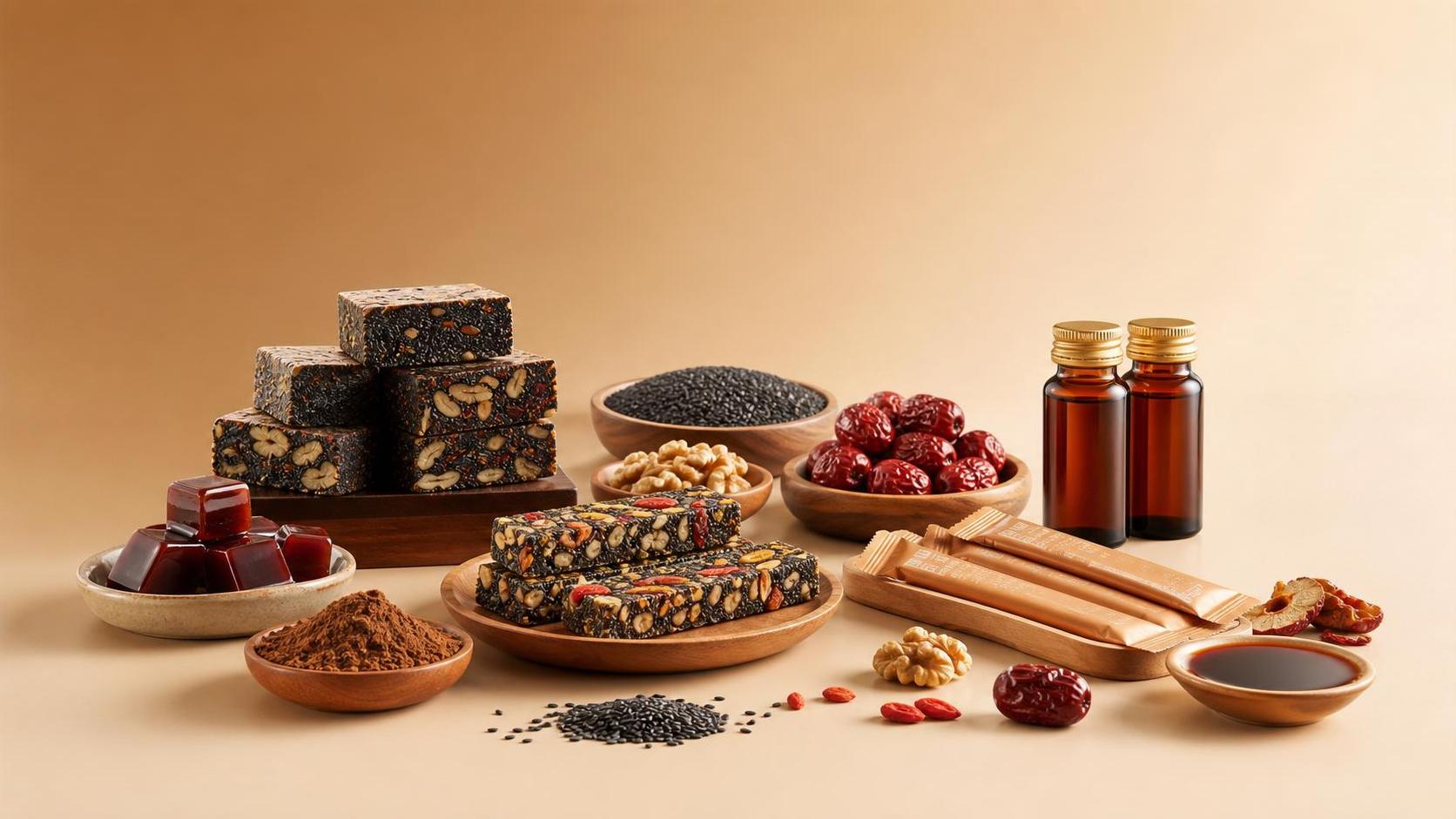
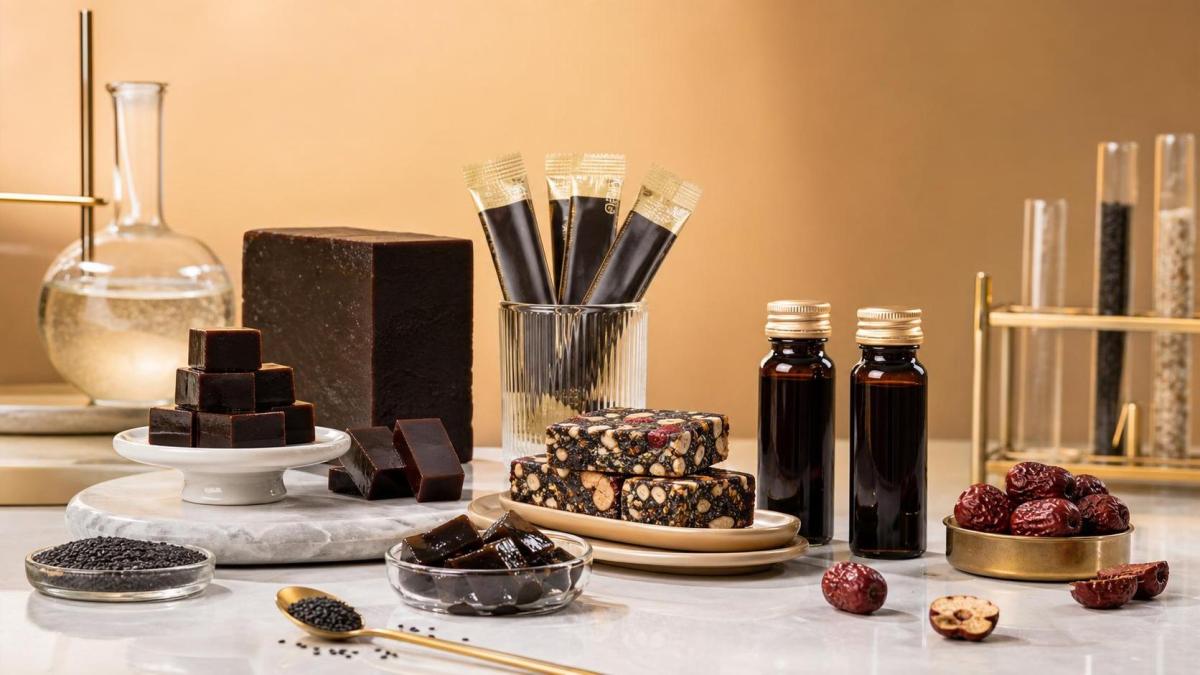
1. Soft gummies and gel systems
Gummies are one of the most promising options for ejiao block.
They support taste adjustment, portion control, and convenient daily use.
Dark colors are also less problematic in this format.
However, solids content and gel strength must be balanced carefully.
Too much ejiao block can push the product toward stickiness or dense chew.
2. Powder sachets and instant blends
Powder systems work well when ejiao block is preprocessed into stable dry material.
This route improves transport, portioning, and compatibility with multi-ingredient blends.
It also supports flexible combinations with black sesame, red dates, collagen, or grains.
The main risk is poor dispersibility after reconstitution.
That can be reduced with carrier selection and particle size control.
3. Nutrition bars and dense snack formats
Nutrition bars suit ejiao block when the product aims for a hearty, substantial eating experience.
Its binder-like contribution can help create cohesive texture in some formulas.
This is especially useful in traditional-style bars with seeds, nuts, or sesame.
But shelf stability should be checked carefully.
Moisture migration can gradually harden the bar or create surface tackiness.
4. Ready-to-drink tonics and concentrated shots
Liquid applications are commercially attractive but technically less forgiving.
Ejiao block can fit concentrated tonics better than thin, clear beverages.
A richer mouthfeel and darker appearance make the ingredient feel intentional.
Still, heat treatment, sediment control, and flavor masking become central tasks.
For many teams, this format requires the most pilot testing.
Use scenarios where ejiao block creates the strongest value
A good format is only half of the decision.
The stronger signal comes from use scenarios that match ingredient perception and product behavior.
Daily nourishment routines
Ejiao block works well in products designed for steady, repeatable daily intake.
Gummies, powders, and small bars are especially suitable here.
They support habitual use without requiring complex preparation.
Premium gifting and seasonal wellness
In premium channels, ejiao block benefits from strong visual and cultural storytelling.
Dense snack forms, tonic shots, and elegant boxed formats fit this scenario better.
The formulation can tolerate richer sensory profiles when the use occasion feels deliberate.
Convenient office or travel consumption
Portable formats make ejiao block easier to integrate into fast daily schedules.
Single-serve powders, bites, and gummies reduce mess and improve compliance.
This is where convenience often matters more than tradition.
Cross-ingredient tonic combinations
Ejiao block often performs better when paired with familiar supporting ingredients.
Black sesame is one of the more natural partners in this space.
A reference point can be Black Sesame Pills, which reflects how traditional pairings can support positioning and flavor logic.
In practice, these combinations can improve acceptance when ejiao block alone feels too narrow.
Format selection checklist for development teams
When deciding how to use ejiao block, a structured checklist saves time.
It also prevents teams from overcommitting to attractive but unstable concepts.
A practical screening sequence
- Start with the target use scenario, not the ingredient alone.
- Shortlist two or three formats that fit expected consumption habits.
- Run bench tests on taste, color acceptance, and processing response.
- Check accelerated stability before expanding flavor options.
- Review compliance language before final commercialization decisions.
Common risks when using ejiao block in functional foods
Even promising formats can fail when the risks are underestimated.
Most issues appear early and can be managed with disciplined development.
Sensory mismatch
Ejiao block may feel too heavy in light fruit systems or crisp snack formats.
If the matrix expects brightness, the ingredient can feel out of place.
Overprocessing stress
Excessive heat or long residence time can weaken quality consistency.
This is more likely in aseptic liquids and baked systems.
Positioning confusion
A technically workable product can still struggle if the use occasion feels unclear.
That is why ejiao block needs a format that matches both function and expectation.
How to reduce these risks
- Prioritize dense, dark, or tonic-like systems first.
- Use pilot batches to confirm viscosity and taste drift over time.
- Build combinations with familiar ingredients when needed.
- Keep the serving ritual simple and easy to repeat.
What a strong ejiao block application usually looks like
A strong ejiao block product rarely tries to hide everything about the ingredient.
Instead, it places ejiao block in a format where its color, texture, and heritage feel natural.
That usually means gummies, powders, nutrition bars, or concentrated tonic products.
From there, success comes from matching the format to a real usage occasion.
Daily nourishment, premium wellness, portable intake, and traditional combination concepts all offer clear paths.
If the goal is a commercially workable solution, start with the simplest system that respects the nature of ejiao block.
Then refine sensory balance, process stability, and scenario fit step by step.
That approach usually leads to faster evaluation, fewer reformulations, and a more convincing functional food concept.